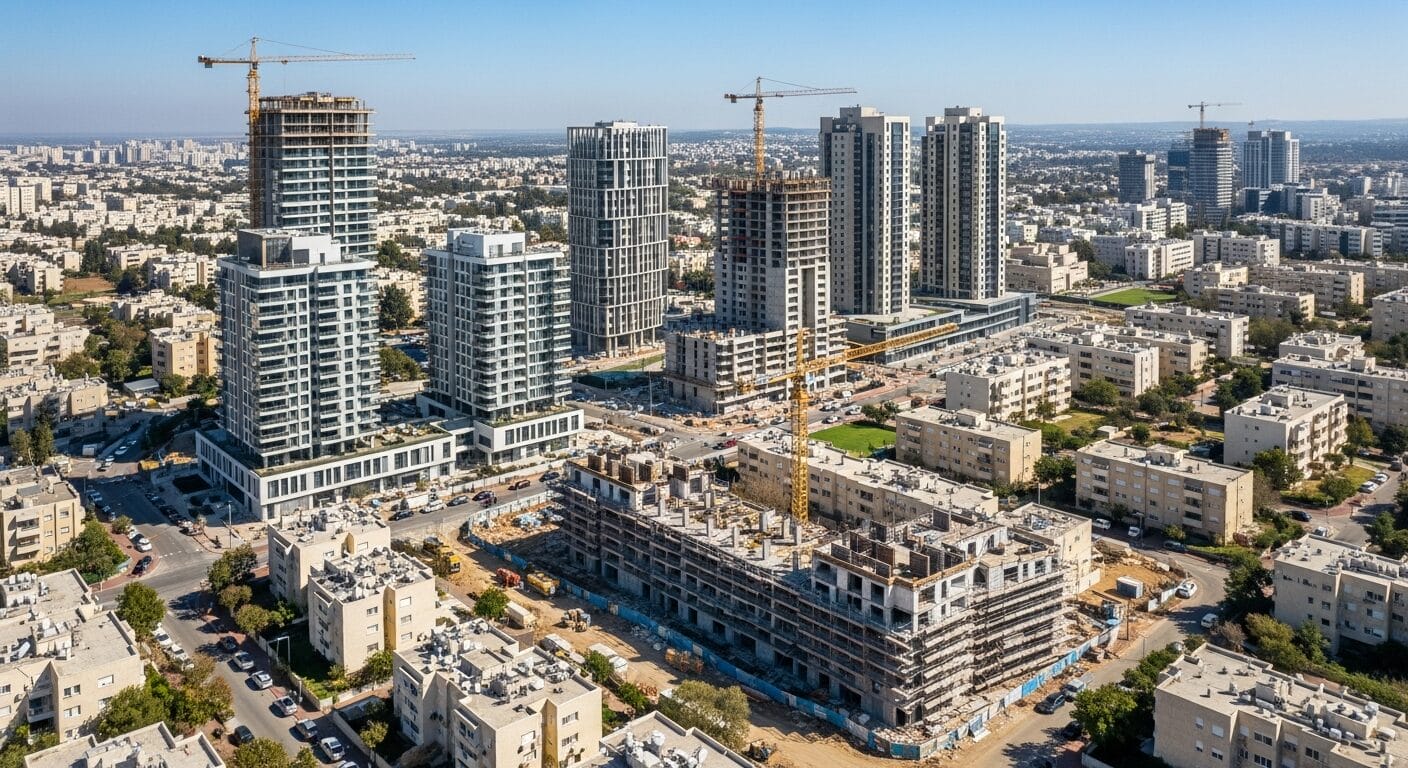
As we look towards 2026, the Israeli real estate landscape is shifting. While Tel Aviv's prices reach stratospheric levels, savvy foreign investors are turning their attention to where the true growth lies. That city is Petah Tikva. No longer just a suburb, it is rapidly becoming the strategic heart of the Gush Dan metropolis, uniquely positioned at a convergence of infrastructure, urban renewal, and affordability. For the discerning investor—whether you're an Oleh, a returning Israeli, or a foreign national seeking a solid investment property in Israel—Petah Tikva in 2026 offers a compelling value proposition that is simply unmatched. My name is Mordechai Nisanov, and as a licensed broker specializing in this city's most promising areas, I will provide you with the definitive guide to capitalizing on this opportunity.
Why Petah Tikva for Foreign Investors? The Smart Alternative
For years, the default answer to "where to buy apartment Israel" has been Tel Aviv. But the market has matured. An investor buying in Tel Aviv today is buying at the peak, paying a premium for prestige while accepting lower rental yields (often 2-2.5%). Ramat Gan offers a closer alternative, but it too is experiencing price saturation. Petah Tikva, however, presents the ideal balance. It offers direct access to Tel Aviv via the Red Line of the light rail, which is now operational, making the commute faster and more reliable than ever. This single piece of infrastructure has fundamentally changed the city's investment thesis.
Beyond transit, Petah Tikva is an economic powerhouse in its own right. It is home to the largest medical complex in the country, including Beilinson and Schneider hospitals, creating constant rental demand from medical professionals. Its sprawling high-tech zones in Kiryat Arye and Kiryat Matalon host major international companies, attracting a high-quality tenant pool. For an investor, this means your property is not dependent on a single market driver. You get the benefit of proximity to Tel Aviv's cultural and business center, combined with Petah Tikva's robust local economy, all at a significantly lower entry price. This is the definition of a strategic real estate Petah Tikva investment.
Best Petah Tikva Neighborhoods for Investment in 2026
Not all neighborhoods are created equal. As a broker who lives and breathes these streets, I guide my clients to focus on areas with specific growth catalysts. For a foreign investor, I recommend focusing on three key areas, each with a distinct investment profile. You can explore these areas in more detail in my complete guide to Petah Tikva neighborhoods.
Achdut: The Urban Renewal Play. This neighborhood is characterized by older buildings ripe for large-scale urban renewal (Pinui Binui). The opportunity here is to purchase a 3 or 4-room apartment in a building slated for demolition and rebuilding. While you collect rent in the short term, the real prize is in 5-7 years when you exchange your old flat for a brand new, significantly larger apartment in a modern tower, often with a balcony, parking, and a security room (Mamad). This is a long-term strategy that can yield returns of 100% or more on your initial investment.
Shaariya: The Stability Anchor. For investors seeking stable, predictable rental income with lower risk, Shaariya is the answer. It's a quiet, family-oriented neighborhood with good schools and a strong sense of community. Properties here are consistently in demand from long-term family tenants. While the explosive growth of urban renewal is less prevalent, the value is in the asset's stability and ease of management. It's an excellent choice for Olim looking for a place to live or for a conservative investor who wants a reliable income-producing property.
Mahane Yehuda: The Balanced Growth Engine. This neighborhood offers a compelling mix of Shaariya's stability and Achdut's growth potential. Located more centrally, it has already undergone significant development but still possesses a wealth of older buildings targeted for TAMA 38 projects. It benefits from its proximity to the city center, the market (Shuk), and major transportation routes. An investor here can buy an apartment that provides solid rent today, with the strong likelihood of a TAMA 38 upgrade in the near future, which will add an elevator, balcony, and Mamad, significantly boosting its value and rental price.
Realistic 2026 Price Ranges (NIS with USD)
To make an informed decision, you need real numbers. Generic estimates are useless. Here are the realistic price ranges you can expect to see in 2026, based on current trends and planned developments. (Note: USD equivalents are approximate, based on a 3.7 NIS/USD exchange rate). For a deeper analysis, see my 2026 pricing guide.
3-Room Apartment (2 Bedrooms, ~75-85 sqm):
- In an older building in Achdut (pre-Pinui Binui): 1,700,000 – 1,950,000 NIS ($460k – $527k)
- In a well-maintained building in Shaariya: 1,900,000 – 2,200,000 NIS ($513k – $595k)
4-Room Apartment (3 Bedrooms, ~90-110 sqm):
- In an older building in Mahane Yehuda (potential for TAMA 38): 2,100,000 – 2,400,000 NIS ($567k – $648k)
- In a new construction project (post-Pinui Binui or new build): 2,800,000 – 3,200,000 NIS ($756k – $865k)
5-Room Apartment (4 Bedrooms, ~120+ sqm):
- In a standard building in Shaariya or similar family neighborhoods: 2,700,000 – 3,100,000 NIS ($730k – $838k)
- In a new, high-spec tower: 3,300,000 – 3,800,000+ NIS ($892k – $1.02M+)
The Israeli Mortgage Process for Foreign Buyers
Securing an Israeli mortgage for foreigners is a structured process, but it is absolutely achievable with the right guidance. The most critical number to know is the Loan-to-Value (LTV) ratio. For a non-resident purchasing an investment property, Israeli banks will typically lend a maximum of 50% of the property's value. This means you must be prepared to provide at least 50% of the purchase price, plus closing costs, from your own capital.
The documentation process is rigorous. Banks will require:
- A valid passport and, if applicable, an Israeli ID (Teudat Zehut).
- Proof of income from your country of residence for the last 1-2 years (e.g., tax returns, salary slips). All documents must be translated into Hebrew by a certified translator.
- Bank statements from the last 6-12 months showing the flow of funds and the source of your down payment.
- A credit report from your home country (e.g., Experian, Equifax, TransUnion).
Not all banks are equally welcoming to foreign clients. Banks like Mizrahi-Tefahot and Bank Leumi have dedicated departments for non-residents and are generally the most experienced. It is highly advisable to work with an independent mortgage broker who specializes in this niche. They can package your application professionally, negotiate rates on your behalf, and navigate the specific requirements of each bank, saving you immense time and frustration.
Purchase Tax (Mas Rechisha) for Foreign Investors: A Real Example
One of the most significant closing costs is the Purchase Tax, or Mas Rechisha. It is crucial to understand how this is calculated, as it is different for foreign investors. Unlike an Israeli citizen buying their first and only home, a foreign investor (or an Israeli who already owns a property) is taxed from the very first shekel. The tax is calculated using brackets that are updated annually.
Let's use a practical example. Assume you are purchasing an investment apartment for 2,500,000 NIS. Using the 2024 tax brackets for an investment property (which are a reliable guide for future planning):
- Bracket 1: On the portion of the value up to 6,055,070 NIS, the tax rate is 8%.
- Bracket 2: On the portion of the value exceeding 6,055,070 NIS, the tax rate is 10%.
In our example, the entire 2,500,000 NIS falls into the first bracket.
The calculation is straightforward:
2,500,000 NIS * 8% = 200,000 NIS
So, on a 2.5 million shekel apartment, you must budget an additional 200,000 NIS (approx. $54,000) just for the purchase tax. This is a non-negotiable cost that must be paid shortly after signing the contract. Failing to budget for this is one of the biggest mistakes investors make.
Urban Renewal: Understanding TAMA 38 and Pinui Binui
The terms TAMA 38 and Pinui Binui are the keys to unlocking massive value in Israeli real estate, especially in cities like Petah Tikva. These are national government initiatives designed to encourage the strengthening and modernization of older buildings. For a detailed look at active projects, check out our TAMA 38 project insights.
TAMA 38 (National Outline Plan 38): This typically applies to a single building. The most common form is TAMA 38/1, where a developer strengthens the building against earthquakes, adds an elevator, a security room (Mamad) to each apartment, and often a balcony. In exchange, the developer gets the rights to build one or two new floors of apartments on top, which they sell for a profit. For the existing owner, this is a huge win: your property is modernized, becomes more valuable and rentable, and you pay nothing for the upgrades.
Pinui Binui (Evacuation and Construction): This is the grand prize of urban renewal. Instead of just renovating, Pinui Binui involves demolishing a complex of old buildings and constructing brand new, modern high-rise towers in their place. An owner of an old 80 sqm apartment might receive a brand new 100-110 sqm apartment in the new project, complete with a balcony, storage room, and underground parking. The process takes longer (5-10 years from signing to completion), but the value creation is immense. Neighborhoods like Achdut are prime targets for Pinui Binui, making them a top choice for long-term investors.
The Role of a Licensed Broker: Your Project Manager on the Ground
As a foreign investor, you might wonder if you can navigate the market alone. The simple answer is that it is incredibly risky. The Israeli real estate market has its own language, culture, and complex bureaucracy. A licensed, professional broker is not just someone who shows you apartments; they are your strategic partner and project manager. At my brokerage, RE/MAX Infinity, we see our role as a fiduciary for our foreign clients.
What should you expect from a good broker?
- Hyper-Local Expertise: Knowledge of which buildings have "problematic" committees or which streets are slated for future development.
- Access: Many of the best deals, especially in urban renewal projects, are not publicly listed. We have access to off-market opportunities.
- Negotiation: We negotiate in Hebrew, with a deep understanding of local market values and negotiation tactics.
- Coordination: We connect you with and manage the other key professionals: a trusted real estate lawyer (not just any lawyer), a mortgage broker, and an appraiser.
Avoid brokers who create a false sense of urgency, who don't listen to your goals, or who lack specific, demonstrable experience in the neighborhood you're targeting. Your broker should be your trusted advisor, not just a salesperson.
Common Mistakes Foreign Investors Make (And How to Avoid Them)
Over the years, I have seen well-intentioned foreign investors make the same costly mistakes. Being aware of them is the first step to avoiding them.
1. Underestimating Total Costs: The purchase price is just the beginning. A common mistake is failing to budget for the Mas Rechisha (8-10%), lawyer's fees (0.5-1.5%), broker's commission (typically 2% + VAT), and potential renovation costs. A safe rule of thumb is to budget an additional 10-13% of the purchase price for total closing costs.
2. Not Using a Specialized Real Estate Lawyer: In Israel, the lawyer plays a critical role in due diligence, checking the property's title (Tabu), and ensuring the contract protects your interests. Using a family friend or a generalist lawyer is a recipe for disaster. You need a lawyer who specializes exclusively in real estate transactions.
3. Ignoring the Importance of a Mamad: For both rental and resale, apartments with a Mamad (secure room) are significantly more desirable and command higher prices. While older apartments may not have one, it's a critical factor to consider, especially when comparing properties. An apartment in a TAMA 38 project will gain a Mamad, instantly increasing its value.
4. Applying Foreign Market Logic: The Israeli market has unique dynamics. Factors like proximity to synagogues, school ratings (for family neighborhoods), sun exposure (Mazgan), and floor number have a different weight here than in the US or Europe. Trust local expertise to interpret the true value of a property.
How to Get Started: Your Practical First Steps
Feeling overwhelmed? That's normal. The key is to break the process down into manageable steps. Here is your action plan to begin your journey to invest in real estate Petah Tikva.
Step 1: Define Your "Why" and "How Much". Are you looking for long-term capital appreciation through Pinui Binui? Or steady rental income for the next 10 years? Be clear on your goals. Simultaneously, determine your total investment capital, remembering the 50% LTV for mortgages and the additional 10-13% for closing costs.
Step 2: Get Pre-Qualified for a Mortgage. Before you even look at properties, speak with an Israeli mortgage broker. Understanding exactly how much you can borrow gives you a firm budget and makes you a more credible buyer when it's time to make an offer.
Step 3: Plan an Exploratory Visit. You cannot buy property from a spreadsheet. Plan a trip to Israel with the specific goal of walking the streets of Achdut, Shaariya, and Mahane Yehuda. Get a feel for the different areas. I always dedicate full days to my visiting clients to provide this essential on-the-ground context.
Step 4: Schedule a Professional Consultation. This is the most important step. You need a trusted advisor to help you synthesize all this information and apply it to your personal situation.
Investing in a foreign country requires a clear strategy and a reliable team on the ground. Petah Tikva represents one of the most compelling opportunities in Israel today, but it must be approached with knowledge and professional guidance. If you are serious about building wealth through Israeli real estate, the time to start planning is now.
Ready to explore how a strategic investment in Petah Tikva can fit into your portfolio? I invite you to schedule a complimentary, no-obligation 30-minute consultation. We can discuss your goals, answer your specific questions, and map out a clear path forward.
Frequently Asked Questions
Is Petah Tikva real estate a good investment for foreigners in 2026?
Yes, Petah Tikva offers strong investment potential for foreigners in 2026, driven by its strategic location, ongoing urban renewal projects, and a growing population. The city is experiencing significant infrastructure development, including new light rail lines, which are expected to boost property values and rental yields.
What are the average property prices in Petah Tikva for foreign buyers?
As of early 2026, average property prices in Petah Tikva for foreign buyers range from approximately 2.2 million ILS for a 3-room apartment to 3.8 million ILS for a 5-room apartment in desirable neighborhoods. Prices can vary significantly based on location, age of the building, and amenities, with new developments commanding higher premiums.
Are there any tax benefits for foreign investors buying property in Petah Tikva?
Foreign investors, particularly Olim (new immigrants), may be eligible for significant tax benefits on real estate purchases in Petah Tikva. Olim can receive exemptions or reduced rates on purchase tax for their first property, and potential relief on rental income for a period. Non-resident foreigners are subject to standard Israeli property taxes.
What are the best neighborhoods in Petah Tikva for rental income properties?
Neighborhoods like Kiryat Matalon, Em Hamoshavot, and the revitalized city center offer excellent potential for rental income properties due to their proximity to employment centers, educational institutions, and public transport. These areas typically see high demand from young families and professionals, leading to strong occupancy rates and competitive rental yields, often between 2.5% and 3.5% annually.
Can a non-resident foreigner get a mortgage for Petah Tikva real estate?
Yes, non-resident foreigners can obtain mortgages for Petah Tikva real estate from Israeli banks, though the terms may differ from those offered to residents. Typically, foreign investors can secure financing for up to 50-60% of the property value, requiring a larger down payment. It's advisable to consult with an Israeli mortgage broker specializing in foreign clients.
What is the process for buying property in Petah Tikva as a foreign investor?
The process involves engaging an Israeli real estate lawyer, signing a preliminary agreement (Zichron Devarim), conducting due diligence, and then signing the final purchase agreement. Foreign investors will need to transfer funds via an Israeli bank account, pay purchase tax, and register the property with the Land Registry. The entire process typically takes 1-3 months.
Have another question? WhatsApp +972-52-625-9846 or send a message.